
Introduction
Getting a simpler, more self-assured grin without the difficulties of metal braces is a major goal for many people. With transparent aligners that fit easily into everyday life, many patients exploring local orthodontic options consider Invisalign Minnehaha as a reliable solution. However, the technology used in Invisalign, particularly the use of 3D scanning and computerized imaging, is what really sets the procedure apart, not only the almost invisible aligners. Several issues, like crowding, gaps, and minor bite problems, can be resolved with Invisalign. Your dentist may recommend a combination of treatments for severe dental issues. In this article, we’ll examine how these advancements transform Invisalign treatment, guaranteeing patients’ expectations, convenience, and quicker outcomes.
Why do people prefer Invisalign?
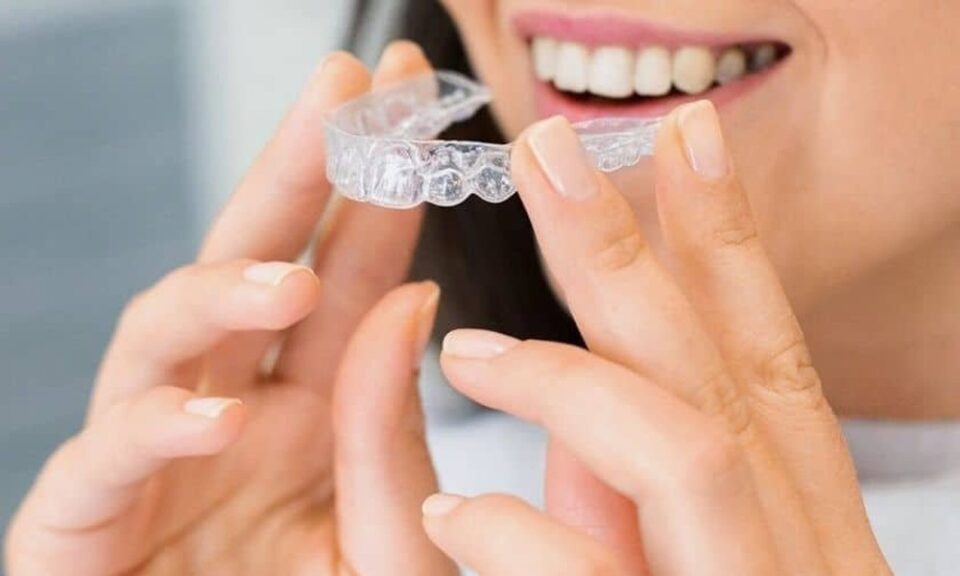
Invisalign uses clear, personalized aligners to gently move teeth into alignment, when compared to metal braces, which use metallic brackets and hooks. Key benefits of Invisalign for individuals juggling work, academic pressure, family, and social obligations are as follows:
- Subtlety: Aligners are almost undetectable because of their concealed form.
- Removal: No limitations on food or beverages.
- Convenience: Smooth trays are comfortable and less irritating.
- Fewer checkups: Fewer dentist appointments when compared to those of metal braces.
Although these advantages make Invisalign attractive, the real magic is found in the way modern digital technology generates a customized treatment strategy. It might be comforting and motivating to hear from other individuals who have finished Invisalign treatment.
Working of 3D scanning
The 3D dental scanner is one of the latest revolutionary technologies used in Invisalign treatments. Your dentist takes hundreds of computerized pictures every second using a handheld scanner rather than having you bite into slimy molding paste.
Some of the advantages of 3D scanning are:
- Precision: Compared with conventional molds, electronic impressions are more accurate and error-free.
- Pleasant: No soreness or untidy trays.
- Rapid: It takes only a few minutes to finish a scan.
- Illustration: A three-dimensional representation of the patient’s teeth is instantly visible.
This digital representation serves as the basis for making customized Invisalign aligners that are unique to your smile.
Accuracy and personalization with digital imaging
After the scan is finished, sophisticated software creates the treatment plan. As every tooth’s progress is properly predicted, aligners are precisely customized.
- Foreseeable results: Prior to the start of the procedure, you will witness a visual sample of your fresh smile.
- Reduced modifications: Accuracy reduces the need for further modifications.
- Time effectiveness: Treatment frequently proceeds more quickly when there is less experimentation and failure.
Improving the experience for patients
Not only does technology increase precision, but it also completely changes the patient’s overall experience. Here’s how:
- Trust from the start: Patients are inspired to remain dedicated when they see a computerized plan.
- Convenience: In case that aligners go missing, electronic versions may be easily updated or replaced.
- Enhanced interaction: Dentists can utilize images to make treatment explanations more comprehensible.
This simplified procedure implies less time spent in the dentist’s chair and greater assurance in the outcomes for individuals.
